Skip to content
Richmond Foundation Repair

Serving Richmond and nearby areas

Cracks in Brick in Richmond, VA

A crack in the brick of your Richmond home can be old mortar wearing out or a sign that the ground under the wall has moved, and a free inspection tells you which, with a written price.

Book a free foundation inspection

Tell us what you are seeing. A local specialist calls you back the same business day.

Local to Richmond

We connect property owners in Richmond and nearby areas, including The Fan, Museum District, Church Hill, Shockoe Bottom, Ginter Park and Woodland Heights, with one independent local foundation repair specialist.

  • A city of old brick

    About 29 percent of homes in the city of Richmond were built before 1940. In the Fan, few pre-Civil War houses survive because most were replaced by brick homes, and most of the neighborhood went up between 1890 and 1930.

  • Mortar meant to wear first

    The National Park Service says mortar on historic brick is meant to be sacrificial. New mortar should be softer than the brick, or trapped water can pop the face off the bricks.

  • Severe weathering

    Henrico County rates the local weathering risk as severe and sets its frost line at 18 inches. Wet brick that freezes and thaws wears out faster.

What it costs

Typical published ranges for Richmond. The contractor's written estimate is the price, and the inspection is free.

WorkTypical range
Tuckpointing, walls 8 feet or under $5 to $10per square foot
Tuckpointing, walls over 8 feet $10 to $25per square foot
Tuckpointing, typical project $1,500 to $2,500
Brick wall crack repair $20 to $60per square foot
Chimney tuckpointing $500 to $2,500
Piers under a settled wall $1,000 to $3,000per pier

See typical foundation repair prices in Richmond

What brick cracks look like

Brick tells a story if you know how to read it. These are the cracks and changes Richmond homeowners call about most.

Stair-step cracks

That zigzag up through the mortar joints, often near a corner.

Cracks from the corners of windows and doors,

Running up or out at an angle.

A straight crack through the bricks themselves,

Not just the mortar.

Mortar that crumbles

Or turns to sand when you rub it with a finger.

Brick faces that pop off

Or flake away, leaving a rough, chalky surface.

Bricks that stick out

Or sit out of line with the ones around them.

A gap where brick meets a window frame,

Door frame or the wood trim.

A chimney pulling away

From the house, with a crack running up beside it.

White, chalky stains

On the brick, a sign that water is moving through it.

Note where the crack is, how wide it is, and whether it runs through mortar or through brick. The inspector will ask.

Why brick cracks in Richmond

Much of the city is old brick. About 29 percent of homes in the city of Richmond were built before 1940. In the Fan, most of the older houses were replaced with brick homes, many of them townhouses, and most of the neighborhood went up between 1890 and 1930. Church Hill has the most homes from before the Civil War of any Richmond neighborhood. When houses stand wall to wall, a crack in one wall can matter to the house next door too.

Old mortar is soft on purpose. The National Park Service says mortar made before the late 1800s used lime as its main binder. That soft mortar is meant to wear away first, so the brick does not. After 100 years of rain, it wears thin. That is normal and fixable.

Hard patches cause new damage. The Park Service warns that hard portland cement mortar on soft old brick traps water in the wall. In freeze and thaw, the water pushes the face off the bricks. Many Richmond brick homes have a patch job like this from decades ago, and the damage often shows right around it.

Water and freezing. Henrico County rates the local weathering risk as severe, with an 18-inch frost line. Gutters that overflow and downspouts that splash the wall keep the lower brick wet, and wet brick that freezes cracks and flakes.

The ground under the wall moves. Richmond sits on the fall line, where Piedmont rock meets the softer Coastal Plain. Soil can change over a short distance, and clay in parts of the region swells and shrinks with water. When one end of a brick wall settles more than the other, stair-step cracks appear.

When it is cosmetic and when it is urgent

Usually cosmetic, but worth fixing:

  • Thin cracks in the mortar that have not changed in years
  • Mortar that is soft or sandy, but bricks still tight and in line
  • Light flaking on a few bricks near a downspout

Have it checked soon:

  • A stair-step crack that is getting longer or wider
  • A crack wider than about a quarter inch, or one side of the crack sitting farther out than the other
  • Cracks in brick outside that line up with cracks or sticking doors inside
  • Bricks that are loose, bulging or leaning out
  • A chimney or porch pulling away from the house

What the fix usually is

The fix depends on whether the wall moved or the mortar wore out.

Repointing

Worn mortar is raked out and new mortar is packed in. On older homes, it should be a softer lime-based mix that matches the color and texture of the old mortar.

Brick replacement

Cracked or flaked bricks are cut out and replaced with matching brick.

Crack stitching

Steel bars set into the mortar joints tie a cracked section back together.

Lintel repair

A rusted steel lintel over a window can crack the brick above it. It is cleaned and treated, or replaced.

Foundation support

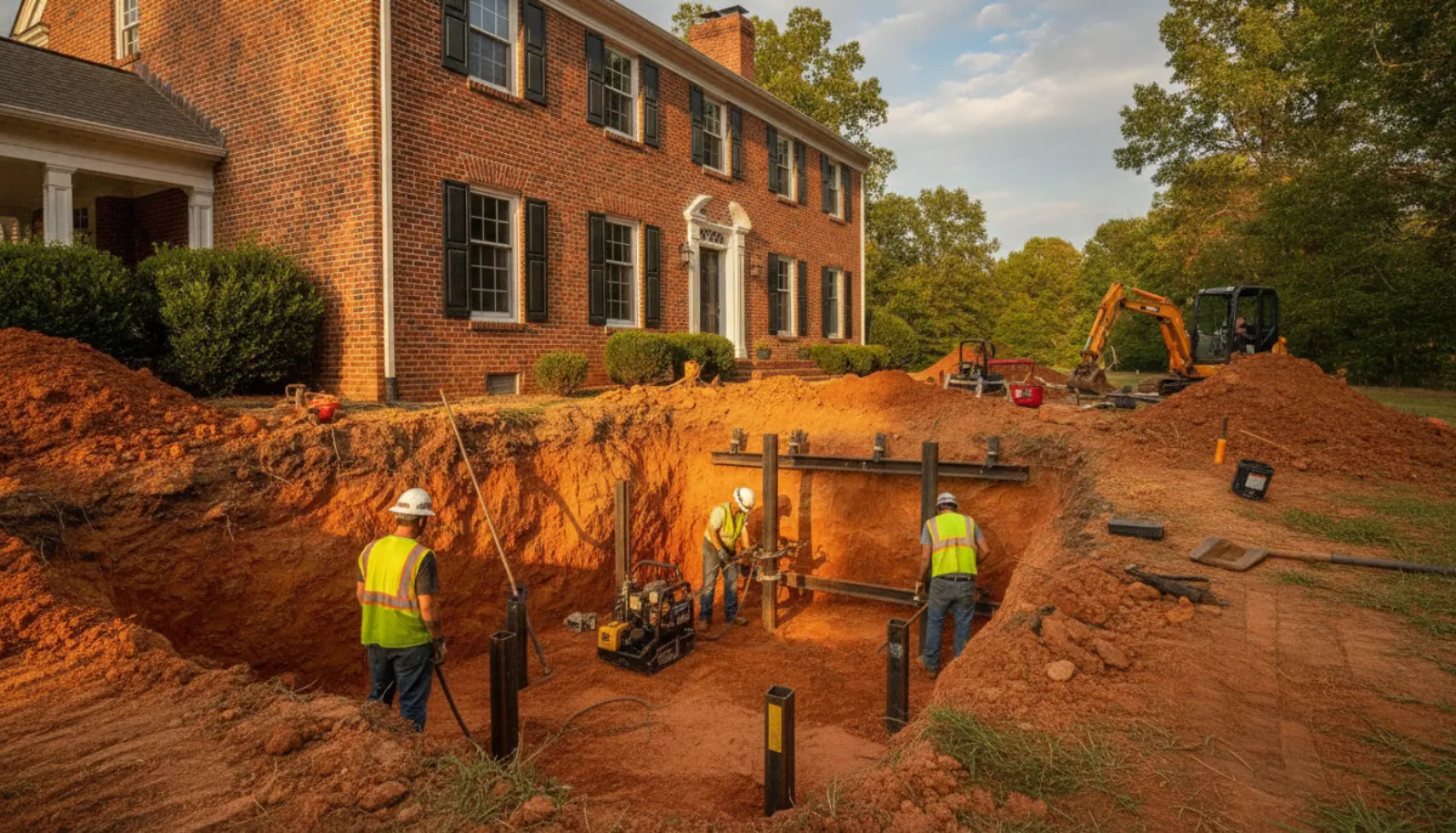
If the wall settled, piers are placed under it first. Then the brick is repaired.

Water control

Gutters, downspouts and grading are fixed so the brick can dry out.

The prices in the table are typical published ranges from Fixr, not a quote. Wall height, access and whether piers are needed move the price the most.

What to do before the inspection

  1. Photograph each crack with a coin or ruler next to it.
  2. Mark the ends of each crack with a pencil and write the date.
  3. Check inside. Look for cracks on the same wall inside the house, and doors or windows that stick nearby.
  4. Watch the rain. See where gutters overflow and where water splashes the brick.
  5. Skip the patch. Do not fill cracks with caulk or hardware store mortar before the inspection. It hides what the inspector needs to see.

Call (804) 293-2238 or send the short form. A local crew will look at the brick inside and out, check whether the wall has moved, and give you a written price.

Frequently asked questions

Are stair-step cracks in brick serious?

They can be. A crack that steps up through the mortar joints often means one part of the wall moved more than the rest. A thin one that has not changed in years may be old settling. One that is wide, growing, or has bricks out of line should be checked.

Can I just fill the crack with caulk or new mortar?

Filling it hides the crack but does not stop what caused it. If the wall is still moving, the crack comes back. On old Richmond brick, hard modern mortar or caulk can also trap water and damage the brick around it.

What is the difference between tuckpointing and repointing?

Both mean raking out worn mortar and packing new mortar into the joints. People in the trade use the words loosely. What matters on an old house is that the new mortar is softer than the brick and matches the old mortar.

Why is the mortar on my old house turning to sand?

Older brick homes were laid with lime mortar, which is soft on purpose. Over many decades, rain and freeze-thaw wear it away, faster where gutters overflow or downspouts splash the wall. It needs to be repointed, not just patched.

Do cracks in brick mean my foundation is failing?

Not always. Many brick cracks are mortar wearing out, a lintel over a window rusting, or a wall shifting a little with the seasons. The way the crack runs, how wide it is, and whether floors and doors inside are moving tell the inspector which it is.

Who fixes cracked brick, a mason or a foundation company?

If the ground under the wall moved, the foundation has to be fixed first, then a mason repairs the brick. If it is only worn mortar, a mason can repoint it. The free inspection tells you which job you need.

(804) 293-2238 Free inspection